Menopause and Perimenopause: The Complete Guide
Everything you need to know about perimenopause, menopause and the years after, from hot flushes and brain fog to HRT, bones, work and the bleeding you should never ignore, with research on African women.

TL;DR: Perimenopause is the run-up to your final period and often starts in your 40s, sometimes earlier. Menopause is confirmed after 12 months without a period, and most women reach it between 45 and 55. Hot flushes, poor sleep, brain fog, mood changes, changing periods and vaginal dryness are all common, and all treatable. HRT is the most effective treatment for most women under 60, and there are good non-hormonal options too. Any bleeding after menopause needs checking by a doctor.
Menopause is something every woman who lives long enough will go through, yet many of us arrive at it knowing almost nothing. Our mothers may have called it "the change" and said little else. Aunties may have told us to bear it quietly. Doctors may have said "it is just age" before we finished our first sentence. So when the night sweats start, or the periods go strange, or the word you need simply vanishes mid-meeting, it can feel frightening and lonely. This guide pulls together everything we have written on perimenopause and menopause into one place, for women in Lagos, Nairobi, Accra, Johannesburg, London and everywhere in between. Each section gives you the essentials and points you to a deeper post if you want more.
What are perimenopause, menopause and postmenopause?
They are three stages of one transition. Perimenopause is the stretch of years when your hormones start to shift and your periods begin to change. The World Health Organization describes it as the time from when these changes first appear until one year after the final menstrual period, and notes it can last several years and affect physical, emotional, mental and social wellbeing. Menopause itself is a single point in time: natural menopause is confirmed after 12 months in a row without a period. Postmenopause is everything after that.
During perimenopause, oestrogen does not fall in a smooth line. It swings up and down, sometimes higher than in your 20s and sometimes much lower, and ovulation becomes less regular. Those swings drive most of the symptoms. We explain the hormones and the stages side by side in perimenopause: what's happening to my body.
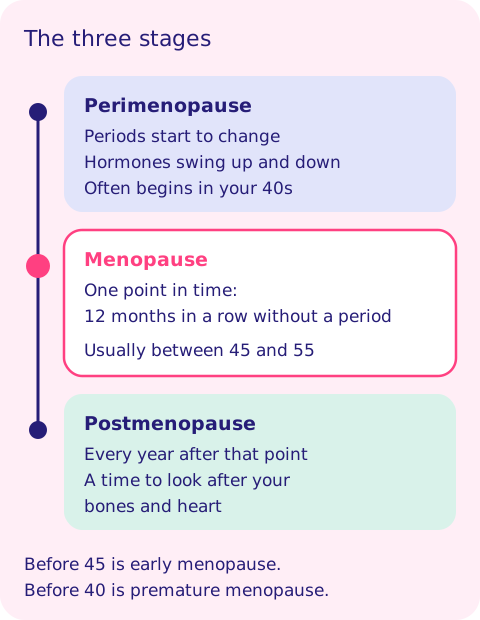
Menopause is a single point, with perimenopause before it and postmenopause after.
When does menopause happen?
Most women reach menopause between the ages of 45 and 55, according to the NHS and the WHO. The NHS adds that it can happen earlier. Perimenopause comes first and can run for several years before your final period, so changes often begin in your 40s. We talk about spotting the early signs in episode 36 of our podcast.
When periods stop before 45, the NHS calls it early menopause, and before 40 it is called premature menopause. It can happen naturally, or after surgery to remove the ovaries, chemotherapy or radiotherapy. The NHS stresses that replacing hormones matters if menopause starts before 45, because there is a higher chance of problems with your bones and heart. If your periods stop before 40, see a doctor.
There is no simple blood test that tells most women over 45 they are in perimenopause. NICE advises doctors to identify perimenopause and menopause without laboratory tests in otherwise healthy women aged 45 or over, going by your symptoms and your cycle history, which is one reason a written record of your periods and symptoms helps so much.
What symptoms should I expect?
Every woman's mix is different, and some women have very few symptoms. The NHS lists a wide range, including hot flushes, night sweats, difficulty sleeping, low mood or anxiety, problems with memory or concentration, vaginal dryness and changes to your periods. The same NHS page also lists joint aches, headaches, palpitations, weight gain and a lower sex drive. The sections below go through the main ones.
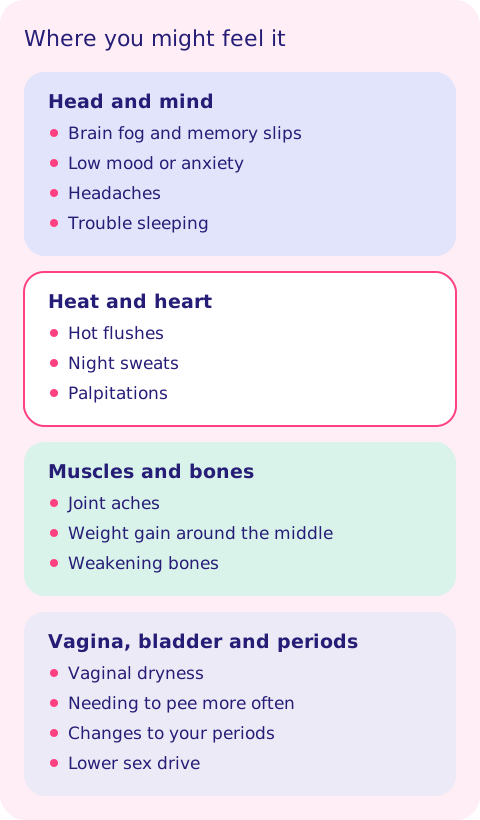
Symptoms listed by the NHS, grouped by where in the body you might notice them.
Hot flushes and night sweats
A hot flush is a sudden wave of heat through your face, neck and chest, often with sweating, a racing heart and then a chill. At night it becomes a night sweat that can soak your wrapper or sheets and wreck your sleep. Research suggests that around menopause the brain's comfortable temperature band narrows sharply, so a tiny rise in body heat sets off a flush.
They often last longer than people expect. The NHS says menopause symptoms usually last 7 to 9 years, sometimes longer. In SWAN, a large US study, frequent hot flushes lasted a median of 7.4 years overall, and African American women had the longest median duration, at 10.1 years. The NHS suggests light clothing, a cool bedroom, stopping smoking and cutting down on alcohol to make flushes easier to live with, and there are effective medical treatments covered below. Our full guide is hot flushes and night sweats: what's happening and what helps, and our post on sleep and hormones helps when night sweats keep waking you.
Brain fog
Forgetting words, losing your keys and rereading the same email three times are common in perimenopause, and they show up in research, not only in how you feel. In SWAN, about two thirds of women reported memory complaints during the transition, and the dip in learning appeared to be time-limited, with improvement returning in early postmenopause.
Poor sleep, hot flushes, low mood and anxiety all make the fog worse, so treating those often helps the most. If memory problems keep happening or affect your day-to-day life, the NHS advises seeing a GP, because the cause may be treatable. Read more in brain fog in perimenopause.
Mood and anxiety
Feeling more irritable, tearful or anxious than usual is common in perimenopause, and some women have new or worse depression. These are physical changes, not a weakness of character. NICE, which sets clinical guidance in England, advises doctors to consider HRT for low mood that starts around the same time as other menopause symptoms, and to consider cognitive behavioural therapy (CBT) too. If you have been diagnosed with depression, it should be treated as depression, alongside your menopause care.
If low mood, hopelessness or loss of interest last most days for more than two weeks, talk to a clinician. Our guide to anxiety and depression in women explains the signs and where to find help.
What happens to your periods in perimenopause?
They usually become less predictable. The NHS says that during perimenopause your periods may become irregular, lighter or heavier, and they can skip months before coming back. Because the 12-month count restarts every time you bleed, one long gap does not mean you have reached menopause.
Some bleeding changes are not normal "change" and need checking: bleeding that soaks a pad every 1 to 2 hours or lasts more than 7 days, periods that come less than 21 days apart or bleeding between periods, bleeding after sex, or any bleeding after 12 months without a period. And until menopause is confirmed, you can still get pregnant, so keep using contraception. Our full guide is periods in perimenopause: heavier, irregular, or gone?
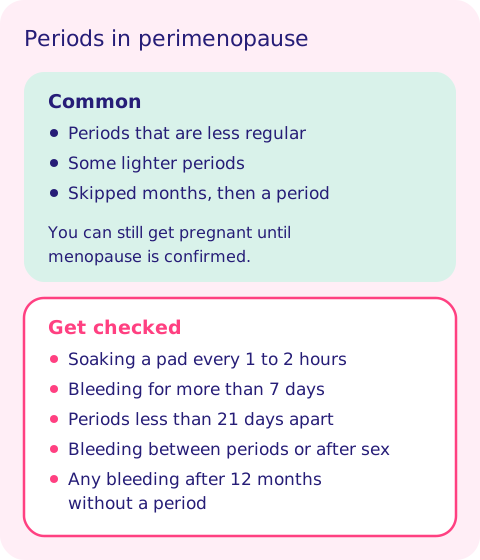
Irregular periods are expected in perimenopause, but these changes are worth a check.
Vaginal dryness and bladder changes
Lower oestrogen can leave the tissues of the vagina, vulva and bladder thinner, drier and more easily irritated. This is called genitourinary syndrome of menopause, and The Menopause Society estimates it affects roughly 27% to 84% of postmenopausal women. It can bring soreness, itching, painful sex, needing to pee more often and repeat urine infections.
Unlike hot flushes, these symptoms tend to persist or get worse without treatment. The good news is that they respond well to treatment. Vaginal moisturisers help everyday dryness, lubricants help during sex, and low-dose vaginal oestrogen treats the cause. The NHS says very little vaginal oestrogen gets into the rest of the body, with no increased risk of breast cancer or blood clots. Read vaginal dryness after menopause: the symptom nobody mentions.
Voice changes
Yes, it can. A 2025 review in the journal Menopause found that up to 46% of menopausal women notice changes in their voice, including a slightly lower pitch, less stability and less stamina when speaking. Teachers, singers, preachers and anyone who speaks for a living may feel it most. Hormone therapy may help some women, though findings are mixed, and a speech and language therapist or ENT specialist can help if it is affecting your work. We wrote about this in how menopause can change the way you sound.
What does research say about African women?
Less than we need. Studies from the continent mostly put the typical age of natural menopause somewhere between 47 and 50: a survey in Ibadan, Nigeria found a median of 50.2 years, a study in rural Orlu found a mean of 47, and one in rural Western Kenya found a median of 48.3. A global meta-analysis found a mean of 48.8 years, with lower ages in Africa, Latin America and Asia, but linked earlier menopause with less education and smoking rather than race itself. In SWAN, once researchers accounted for education, health and other factors, ethnic groups did not differ in age at the final period.
Symptom patterns may differ too. In the US, Black women report hot flushes that last longer. In the Orlu study, bone and joint pain were the most common symptoms. A 2026 study from Ghana found that symptoms disrupted women's income and caregiving, and that emotional distress was widespread but often hidden because of stigma. Most of these studies are small, local or old, so treat any single number as a rough guide. We look at the evidence, and its limits, in menopause in African women: what the research says, and what we don't know, and on the podcast in episode 43 on the women's health data gap.
Is HRT safe?
For most women under 60 without a history of breast cancer or blood clots, the NHS says the benefits of HRT generally outweigh the risks. HRT replaces the oestrogen your body is making less of, with a progestogen added if you still have a womb to protect its lining. It comes as tablets, patches, gels and sprays, and the progestogen can come from a hormonal coil. The Menopause Society calls it the most effective treatment for hot flushes and night sweats, and it helps prevent bone loss.
The fear many women carry comes from a 2002 US study, the Women's Health Initiative, whose participants had an average age of 63 and were taking tablets. Later analyses found younger women had lower risks and better results. The risks have not disappeared: the NHS gives around 5 extra cases of breast cancer for every 1,000 women taking combined HRT for 5 years, and tablets slightly raise the risk of clots, while patches, gels and sprays do not. HRT may not suit you if you have had breast, ovarian or womb cancer, blood clots, untreated high blood pressure or liver disease.
Access is a hurdle in much of Africa. A survey in Enugu, Nigeria found only 38.9% of women attending a gynaecology clinic knew anything about HRT, and none were using it. Ask a gynaecologist or hospital menopause clinic rather than buying hormones informally. Our full guide is HRT without the fear: benefits, risks and who it's for.
What are the non-hormonal options?
If you cannot take HRT, or would rather not, you still have choices. NICE recommends considering menopause-specific CBT for hot flushes, and for the sleep problems and low mood that come with them. In 2026, NICE recommended fezolinetant, a non-hormonal tablet that acts on the brain's temperature control centre, as an option for moderate to severe hot flushes and night sweats when HRT is unsuitable. Some antidepressants (SSRIs and SNRIs) can also help, though NICE advises they are not routinely offered first for flushes alone.
Herbal products such as black cohosh and soy isoflavones are widely sold, but quality varies and some interact with other medicines, so the NHS advises talking to a doctor before taking herbal supplements. Regular exercise, good sleep routines, a balanced diet and stopping smoking support every other treatment. For a gentler, whole-life look at this stage, read menopause mastery: thriving through midlife changes with confidence.
| Option | What it is | Good to know |
|---|---|---|
| HRT | Oestrogen as tablets, patches, gels or sprays, plus a progestogen if you have a womb | The most effective treatment for hot flushes and night sweats. Patches, gels and sprays do not raise the risk of clots |
| Vaginal oestrogen | Low-dose oestrogen used in the vagina | Treats dryness at its cause, and very little reaches the rest of the body |
| Vaginal moisturisers and lubricants | Products you can buy without a prescription | Moisturisers ease everyday dryness, lubricants help during sex |
| Fezolinetant | A non-hormonal tablet that acts on the brain's temperature control centre | A NICE option for moderate to severe flushes when HRT is unsuitable |
| CBT for menopause | A short course of talking therapy | NICE suggests considering it for flushes, sleep problems and low mood |
| SSRIs or SNRIs | Some antidepressants | Can help, but not routinely offered first for flushes alone |
Why do bones and heart health matter after menopause?
Oestrogen helps protect both. The NHS explains that after menopause, falling oestrogen can lead to a rapid decrease in bone density, and that women who have an early menopause or a hysterectomy before 45 are at even greater risk of osteoporosis. Osteoporosis is often called a silent disease because there are usually no symptoms until a bone breaks. Weight-bearing exercise such as brisk walking and dancing, strength training, enough calcium and vitamin D, and not smoking all help. The NHS notes that people with dark skin, including those of African or African-Caribbean background, may not make enough vitamin D from sunlight, so ask your doctor whether a supplement makes sense. Our guide to bone health and osteoporosis has the details.
Your heart changes too. The WHO notes that women's advantage over men in terms of cardiovascular disease gradually disappears as oestrogen falls after menopause. Midlife is a good time to know your blood pressure, blood sugar and cholesterol numbers, keep moving and stop smoking. Our podcast episode on women's heart health goes further.
- Weight-bearing exercise, such as brisk walking or dancing.
- Strength training to keep muscles and bones strong.
- Calcium and vitamin D from food, plus a vitamin D supplement if your doctor advises one, especially if you have dark skin.
- Stop smoking, which helps your bones, your heart and your hot flushes.
- Know your numbers: blood pressure, blood sugar and cholesterol.
- Menopause before 45? Ask about hormone replacement to protect your bones and heart.
How does menopause affect women at work?
Often more than anyone admits. Many women in their 40s and 50s are at the peak of their careers while managing broken sleep, hot flushes in meetings and brain fog at their desks. The NHS notes that early advice can reduce the effects of menopause on your health, relationships and work. We explore why support at work matters in episode 31 of our podcast.
Small changes help: a desk fan or a seat near a window, flexibility around start times after a bad night, written notes after meetings, and permission to step out during a flush. If your workplace has an occupational health service, HR team or menopause policy, use it. You do not have to share every detail to ask for what you need.
When should I see a doctor about menopause?
See a doctor or nurse if symptoms are affecting your sleep, work, mood or relationships. You do not need to wait until things are severe. Get checked promptly if:
- you have menopause symptoms before 45
- your periods are getting heavier rather than lighter, last more than seven days, or come less than 21 days apart
- you bleed between periods or after sex
- you have night sweats with a high temperature, a cough or weight loss you cannot explain
- you have palpitations, a fast or pounding heartbeat
- your memory problems keep happening or affect daily life
- you feel low or hopeless most days for more than two weeks
Any vaginal bleeding after menopause needs checking, even if it is light or happens once. The NHS says you should see a GP if you have any bleeding after menopause. It is usually caused by something minor, but it can be a sign of womb cancer, so do not wait for it to happen again or let anyone tell you it is old blood clearing out.
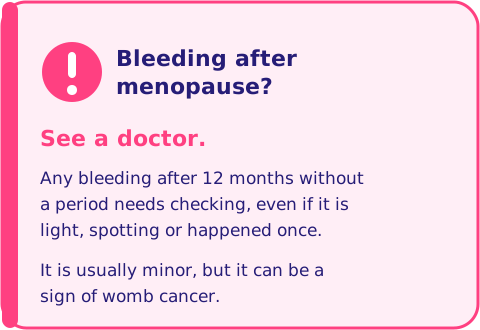
Bleeding after menopause always needs a doctor's check.
If you have felt brushed off before, our guide on how to talk to your gynaecologist has words you can use.
Tracking the change
Perimenopause can stretch over years, and memory is a poor record keeper, especially when you are foggy and tired. Writing down your bleeding days, how heavy they were, your hot flushes, sleep and mood turns a vague sense that "something is off" into a pattern you and your doctor can see.
This is where Asele can help, quietly. Cycle tracking and symptom logging let you see how your periods, flushes, sleep and mood shift over months. The Asele Health Brief turns that record into a pre-visit summary you can take to your appointment. And Amara, our in-app assistant, can talk through what you are noticing in Yoruba, Hausa, Igbo, Swahili, French or English. You can find us at Asele.
Frequently asked questions
Can I get pregnant during perimenopause?
Yes. As long as you are still ovulating, even occasionally, pregnancy is possible. The NHS advises continuing contraception for two years after your last period if you are 40 to 49, and for one year if you are 50 or over. HRT is not a contraceptive.
How long does menopause last?
Menopause itself is a single day, 12 months after your final period, but symptoms can run for years either side. The NHS says symptoms usually last 7 to 9 years and sometimes longer, and research suggests hot flushes often last longer for Black women. Vaginal dryness tends to persist unless it is treated.
Is it too late to start HRT?
The Menopause Society says the balance is most favourable for women under 60 or within 10 years of menopause. Starting later is not automatically ruled out, but the balance of benefits and risks shifts with age and health, so it is a decision to make with a clinician. Low-dose vaginal oestrogen for dryness is a separate option with very little effect on the rest of the body.
Do African women go through menopause earlier?
Studies from Nigeria and Kenya put the average age at around 47 to 50, a little earlier than in Europe or the US. The difference seems linked to education, income, smoking and overall health more than to being African. Your own timing depends on your body and your family history.
Does menopause cause weight gain?
The NHS says weight gain during perimenopause and menopause is common and often happens around the stomach and upper body, and that it is common to lose muscle strength as you get older. Strength training, staying active and eating well help, and they protect your bones and heart too.
This guide is education, not medical advice. Menopause is a natural stage of life, but you deserve proper care through it, so talk to a clinician about anything that worries you.
References
- World Health Organization. Menopause fact sheet. who.int
- NHS. Menopause and perimenopause. nhs.uk
- NHS. Early or premature menopause. nhs.uk
- NHS. Symptoms of menopause and perimenopause. nhs.uk
- NHS. Things you can do to help menopause and perimenopause symptoms. nhs.uk
- NHS. Benefits and risks of hormone replacement therapy (HRT). nhs.uk
- NHS. Postmenopausal bleeding. nhs.uk
- NHS. Osteoporosis: causes. nhs.uk
- NICE. Menopause: identification and management (NG23), recommendations. nice.org.uk
- NICE. Fezolinetant for treating moderate to severe vasomotor symptoms associated with menopause (TA1143), 2026. nice.org.uk
- Freedman RR. Menopausal hot flashes: mechanisms, endocrinology, treatment. J Steroid Biochem Mol Biol, 2014. pmc.ncbi.nlm.nih.gov
- Avis NE, et al. Duration of menopausal vasomotor symptoms over the menopause transition (SWAN). JAMA Intern Med, 2015. pmc.ncbi.nlm.nih.gov
- Study of Women's Health Across the Nation (SWAN). Fact sheet: memory and cognition during and after the menopause transition. swanstudy.org
- The 2020 genitourinary syndrome of menopause position statement of The North American Menopause Society. Menopause, 2020. doi.org
- Bensoussan YE, et al. Menopause and the voice: a narrative review of physiological changes, hormone therapy effects, and treatment options. Menopause, 2026. pubmed.ncbi.nlm.nih.gov
- OlaOlorun F, Lawoyin T. Age at menopause and factors associated with attainment of menopause in an urban community in Ibadan, Nigeria. Climacteric, 2009. pubmed.ncbi.nlm.nih.gov
- Schoenaker DA, et al. Socioeconomic position, lifestyle factors and age at natural menopause: a systematic review and meta-analyses. Int J Epidemiol, 2014. pmc.ncbi.nlm.nih.gov
- Gold EB, et al. Factors related to age at natural menopause: longitudinal analyses from SWAN. Am J Epidemiol, 2013. pmc.ncbi.nlm.nih.gov
- Tweneboah-Koduah F, et al. Menopause as an embodied and occupational disruption: a qualitative study of women's experiences in Ghana. BJOG, 2026. pubmed.ncbi.nlm.nih.gov
- US Food and Drug Administration. HHS advances women's health, removes misleading FDA warnings on hormone replacement therapy. November 2025. fda.gov
- A survey of women's knowledge and perception of hormone replacement therapy in Enugu, South East Nigeria. Niger J Med, 2013. pubmed.ncbi.nlm.nih.gov
- Anolue FC, et al. Women's experience of menopause in rural communities in Orlu, Eastern Nigeria. Int J Gynaecol Obstet, 2012. pubmed.ncbi.nlm.nih.gov
- Noreh J, et al. Median age at menopause in a rural population of western Kenya. East Afr Med J, 1997. pubmed.ncbi.nlm.nih.gov
- The 2022 hormone therapy position statement of The North American Menopause Society. Menopause, 2022. pubmed.ncbi.nlm.nih.gov
- NHS. Heavy periods. nhs.uk
- NHS. Irregular periods. nhs.uk
- NHS. Night sweats. nhs.uk
- NHS. Memory loss (amnesia). nhs.uk
- NHS. Vitamin D. nhs.uk
- NHS. Symptoms of cervical cancer. nhs.uk
- NHS. Symptoms of depression in adults. nhs.uk