Menopause in African Women: What the Research Says, and What We Don't Know
Studies from Nigeria, Kenya and Ghana, and large US research on Black women, are starting to sketch what menopause looks like for African women. Here is what the evidence shows, where it falls short, and why that matters for you.
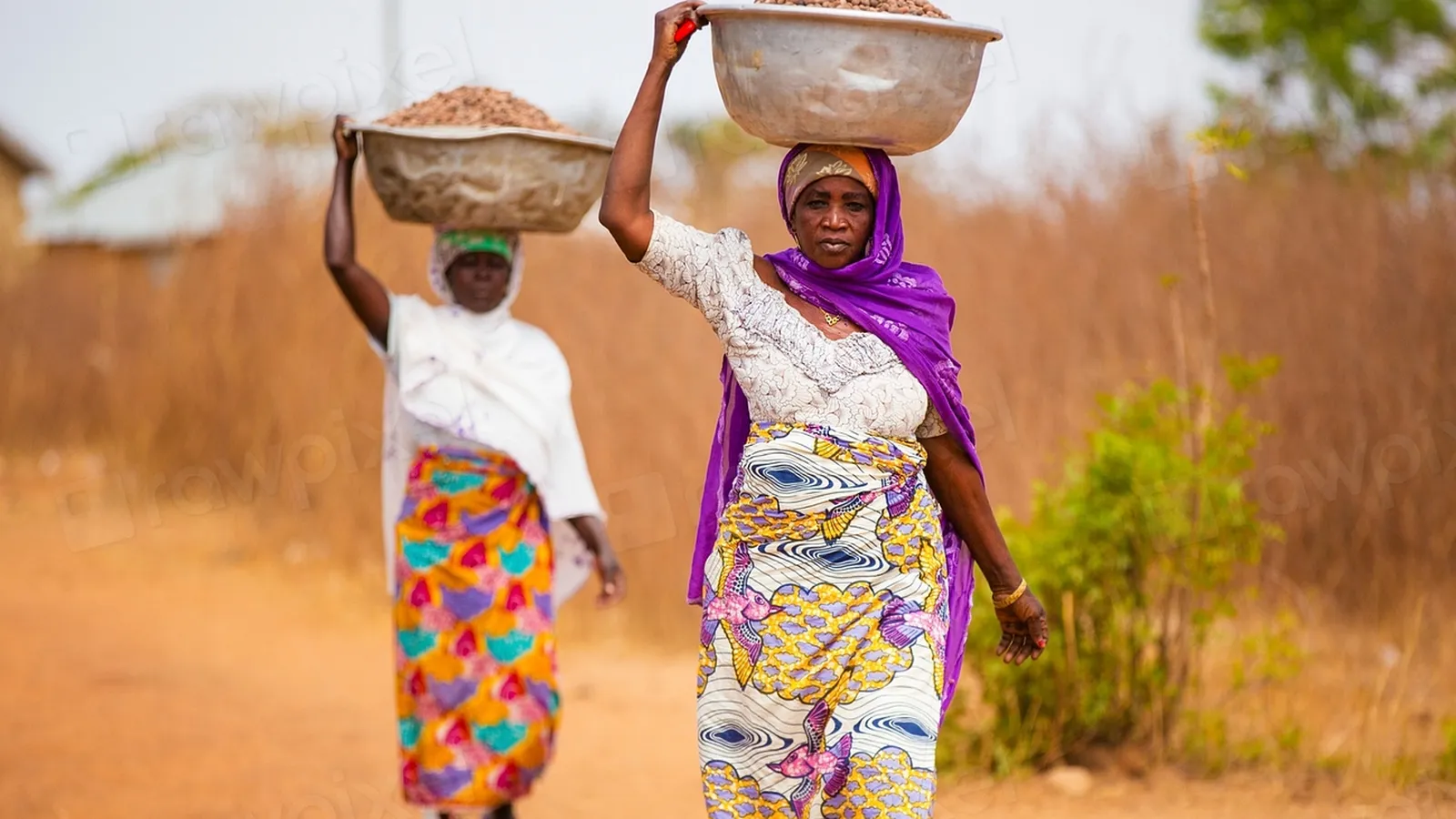
TL;DR: Studies in Nigeria and Kenya put the typical age of natural menopause at around 47 to 50, a little earlier than in Europe or the US, though this gap seems tied to education, income and health more than race. In the US, Black women report more hot flushes, lasting longer. Research from the African continent is still thin, so treat any single number as a starting point, not a rule.
Ask your mother, aunties or older colleagues about menopause and you may get a shrug, a laugh, or a change of subject. "It is just age." "It will pass." "Do not talk about it in front of the children." For many African women, the change happens in near silence, and the research has not been much louder. Much of the menopause research that shapes medical guidance comes from Europe and North America. So what do we know about African women and women of African descent, and where are the gaps? Here is a careful look at the evidence, limits included.
At what age do African women reach menopause?
Studies from the continent mostly find an average age somewhere between 47 and 50. A survey of 1,189 women in Ibadan, Nigeria estimated a median age at natural menopause of 50.2 years. A study of 349 women in rural Orlu, Eastern Nigeria found a mean age of 47. In rural Western Kenya, a study of 1,078 women, almost all from the Luhya community, found a median of 48.3 years.
For comparison, a 2014 meta-analysis of 46 studies across 24 countries found a global mean age at natural menopause of 48.8 years, with ages lowest in African, Latin American, Asian and Middle Eastern countries and highest in Europe and Australia.
Why might the age be earlier?
Probably not because of race itself. That same meta-analysis found that more education was linked with later menopause, and that smoking brought it forward by about a year. In SWAN, a long-running US study of more than 3,000 women from five racial and ethnic groups, the median age at final period was 52.5, and once researchers accounted for education, employment, weight, smoking and overall health, racial and ethnic groups did not differ in age at the final period.
The Nigerian data point the same way. In the Ibadan study, women with no formal education were more likely to have already reached menopause, while women in managerial or professional jobs and those who had used the contraceptive pill were less likely to have. Put simply, where menopause comes earlier, the reasons may have more to do with education, income, smoking, nutrition and overall health than with being African.
The limits of these numbers
Each of these studies tells us something useful, and each has gaps worth knowing:
- They are small and local. One city in Nigeria, one rural district in Kenya, one set of church communities in Imo State. Africa has 54 countries and enormous variation in diet, income, altitude and ethnicity. No single study speaks for all African women.
- Some rely on memory. Women were sometimes asked to recall when their periods stopped, which can be years in the past and is easy to round up or down.
- Some are old. The Kenyan study dates from 1997. Life expectancy, family size and nutrition have changed a lot since then.
- Recruitment shapes results. The Orlu study, for example, surveyed women attending a Christian women's convention, who may not reflect all women in the area.
So if you read that "African women reach menopause at 47", treat it as a rough guide. Your own timing depends on your body, your history and your family.
Do Black women have worse hot flushes?
In the US research, yes on average. In SWAN, African American women were the most likely to report hot flushes and night sweats, even after accounting for other factors, and a later SWAN analysis found they had the longest symptoms, with a median duration of 10.1 years compared with 7.4 years overall. The NHS also notes that women from a Black ethnic background are more likely to have hot flushes that are severe and continue longer.
Two cautions. First, African American women are not the same population as women in Lagos, Nairobi or Accra, and the reasons for these differences are not fully understood. Stress, weight, education and income all appear in the research as possible factors. Second, some studies from the continent report different symptom patterns. In the Orlu study, bone and joint pain were the most common symptoms, not hot flushes. Whether that reflects biology, how questions were asked, or which symptoms women feel able to name, we do not yet know. We go deeper on managing flushes in hot flushes and night sweats: what helps.
Silence, stigma and strength
Research on how African women experience menopause paints a mixed picture. A 2025 review of 42 studies from sub-Saharan Africa found that some women see menopause as a social transition that can bring greater status and autonomy, while in other settings it is linked with stigma or a loss of femininity. Few women in these studies were aware of hormone therapy, and many saw menopause as a natural process rather than a medical one.
A 2026 qualitative study from Ghana, published in the journal BJOG, found that symptoms disrupted women's income and caregiving, and that emotional distress was widespread but often hidden because of stigma. Women faced limited awareness, fragmented services and low prioritisation of menopause care, and many coped with herbal remedies or by withdrawing socially.
In the UK, the British Menopause Society notes that there is limited research on menopause in British ethnic minority women, and lists barriers that will sound familiar to many diaspora families: menopause as a taboo topic, an expectation that women stay silent about their ailments, and health information that rarely shows women who look like them.
There is strength in our cultures too. Many communities honour older women as mothers and elders, and the 2025 review found that in some settings menopause brings more autonomy and more say in family decisions. Both can be true: you can welcome this stage of life and still deserve care for symptoms that disrupt it.
Why the research gap matters
When studies leave African women out, clinical guidance is built on other bodies. A doctor may not ask about joint pain, may underestimate how long your hot flushes could last, or may not discuss treatment at all. Earlier menopause, where it happens, also matters for long-term health, because the drop in oestrogen affects bones and the heart. Our guide to bone health and osteoporosis explains why this is worth acting on early. We talked about the wider problem on the podcast in Blush and Bloom episode 43 on the women's health data gap.
When to talk to a doctor
Speak to a clinician if menopause symptoms are affecting your sleep, work, mood or relationships. Get checked sooner if your periods stop before 40, if periods become heavier rather than lighter, or if you have any vaginal bleeding after 12 months without a period, which the NHS says should always be checked. Treatment options include HRT and non-hormonal choices, which we cover in HRT benefits and risks. For the years leading up to menopause, read perimenopause: what's happening to my body. This post is education, not medical advice.
Your story is data too
The best evidence on your menopause is your own experience, written down. Asele lets you track your cycle and log symptoms like hot flushes, joint pain, sleep and mood, so patterns become visible over months instead of fading from memory. The Asele Health Brief turns that record into a summary to take to your doctor, and Amara, our in-app assistant, can talk it through with you in Yoruba, Hausa, Igbo, Swahili, French or English. You can find us at Asele. The research is still catching up with African women. You do not have to wait for it to take your own symptoms seriously.
References
- OlaOlorun F, Lawoyin T. Age at menopause and factors associated with attainment of menopause in an urban community in Ibadan, Nigeria. Climacteric, 2009. pubmed.ncbi.nlm.nih.gov
- Anolue FC, et al. Women's experience of menopause in rural communities in Orlu, Eastern Nigeria. Int J Gynaecol Obstet, 2012. pubmed.ncbi.nlm.nih.gov
- Noreh J, et al. Median age at menopause in a rural population of western Kenya. East Afr Med J, 1997. pubmed.ncbi.nlm.nih.gov
- Schoenaker DA, et al. Socioeconomic position, lifestyle factors and age at natural menopause: a systematic review and meta-analyses of studies across six continents. Int J Epidemiol, 2014. pmc.ncbi.nlm.nih.gov
- Gold EB, et al. Factors related to age at natural menopause: longitudinal analyses from SWAN. Am J Epidemiol, 2013. pmc.ncbi.nlm.nih.gov
- Gold EB, et al. Longitudinal analysis of the association between vasomotor symptoms and race/ethnicity across the menopausal transition (SWAN). Am J Public Health, 2006. pubmed.ncbi.nlm.nih.gov
- Avis NE, et al. Duration of menopausal vasomotor symptoms over the menopause transition (SWAN). JAMA Intern Med, 2015. pmc.ncbi.nlm.nih.gov
- Matina SS, et al. Menopause and aging in sub-Saharan Africa: a narrative review. Climacteric, 2025. pubmed.ncbi.nlm.nih.gov
- Tweneboah-Koduah F, et al. Menopause as an embodied and occupational disruption: a qualitative study of women's experiences in Ghana. BJOG, 2026. pubmed.ncbi.nlm.nih.gov
- British Menopause Society. Menopause in ethnic minority women (tool for clinicians), 2023. thebms.org.uk
- NHS. Symptoms of menopause and perimenopause. nhs.uk
← Back to The Journal