Stroke in Women: The Signs That Get Missed
Stroke is often thought of as an older man's problem, but pregnancy, pre-eclampsia, migraine with aura and high blood pressure all shape a woman's risk. For World Stroke Day, here are the signs to know and what to do in the first minutes.
TL;DR: A stroke is a medical emergency. Use FAST to spot it: face drooping, arm weakness, speech problems, time to call for help. BE FAST adds sudden loss of balance and sudden vision changes. Women face some extra risks, including pregnancy and the weeks after birth, a history of pre-eclampsia, and migraine with aura combined with the contraceptive pill. High blood pressure is the biggest risk factor you can change, so get yours checked.
When people picture a stroke, they often picture an older man clutching his head. So when a woman in her thirties suddenly cannot find her words, or one side of her face looks different in the mirror, the people around her might say she is tired, stressed, or needs to lie down. That pause costs time, and in a stroke, time is brain. October 29 is World Stroke Day, a good moment to learn the signs, understand the risks that are specific to women, and know exactly what to do if it happens in front of you.
What is a stroke?
A stroke happens when the blood supply to part of the brain is cut off, either by a blockage or by bleeding. Without oxygen, brain cells start to die, which is why fast treatment matters so much. Strokes can happen at any age, and high blood pressure is one of the main conditions that raises the risk.
How do you recognise a stroke with FAST?
The NHS uses the word FAST to help you remember the main signs, which usually come on suddenly:
- Face: one side of the face may droop, and it might be hard to smile
- Arms: the person may not be able to lift both arms and keep them there, because of weakness or numbness in one arm
- Speech: words may be slurred, or the person may sound confused
- Time: time to call 999
In the US, the CDC teaches BE FAST, which adds two letters at the start: B for balance, asking if the person feels dizzy or off balance, and E for eyes, asking if they suddenly have trouble seeing.
What other stroke signs get missed?
Not every stroke looks like a drooping face. The NHS lists other signs that can point to a stroke:
- weakness or numbness down one side of the body
- blurred vision or loss of sight in one or both eyes
- finding it hard to speak or think of words
- confusion and memory loss
- feeling dizzy or falling over
- a severe headache
- feeling or being sick
These are the signs that are easy to brush off, especially in women who are busy looking after everyone else. A sudden, severe headache with no clear cause, or sudden confusion, deserves the same urgency as a drooping face.
Symptoms can also stop after a few minutes. This may be a transient ischaemic attack, sometimes called a mini-stroke, and the NHS says having one makes you more likely to have a stroke. The NHS advises getting medical help straight away even if symptoms have gone.
What should you do if you think someone is having a stroke?
Call for emergency help immediately. In the UK, the NHS says to call 999 if you think someone is having or has had a stroke, including if signs appeared in the last 24 hours and have since stopped, and not to drive yourself to A&E. Elsewhere, call your local emergency number or get to hospital immediately. Do not wait to see if it passes.
Stroke risks that are specific to women
Many stroke risks are shared by everyone: high blood pressure, diabetes, high cholesterol, an irregular heartbeat called atrial fibrillation, and smoking. But the NHS also lists risks that only apply to women, or that affect women far more often.
Pregnancy and the weeks after birth. A review of stroke in pregnancy found that stroke can happen at any point, but the highest-risk times are the third trimester and the first six weeks after birth. A severe headache after you have had your baby is not something to push through.
Pre-eclampsia, now and later. Pre-eclampsia raises the risk of stroke during pregnancy and in the weeks after birth. It also leaves a long-term mark. In the Black Women's Health Study, which followed Black women in the US for a median of 22 years, those with a history of high blood pressure in pregnancy had an estimated 66 percent higher long-term risk of stroke. If you have had pre-eclampsia, tell every new doctor you see, even years later, and keep checking your blood pressure. Our guide to the warning signs of pre-eclampsia explains what to look out for.
Migraine with aura and the combined pill. Migraine is listed by the NHS as a stroke risk factor, and so is taking the combined contraceptive pill. Together, the risk is higher, which is why the NHS says the combined pill may not be suitable if you have migraines with warning signs called aura, such as flashing lights or zigzag lines before the headache. If this is you, ask a doctor, nurse or pharmacist about other options. We compare methods in contraception methods compared.
Smoking. The NHS also says the combined pill may not be suitable if you are 35 or older and smoke. Quitting smoking is also one of the NHS's main steps for lowering stroke risk.
Are Black women at higher risk of stroke?
Yes. The NHS lists being from a Black or South Asian background as a factor that increases stroke risk, along with sickle cell disease, which the NHS notes is more likely to be inherited if your background is African or Caribbean. Researchers in the Black Women's Health Study note that Black women have a higher burden of both pre-eclampsia and stroke than White women in the US.
Why high blood pressure matters so much in Africa
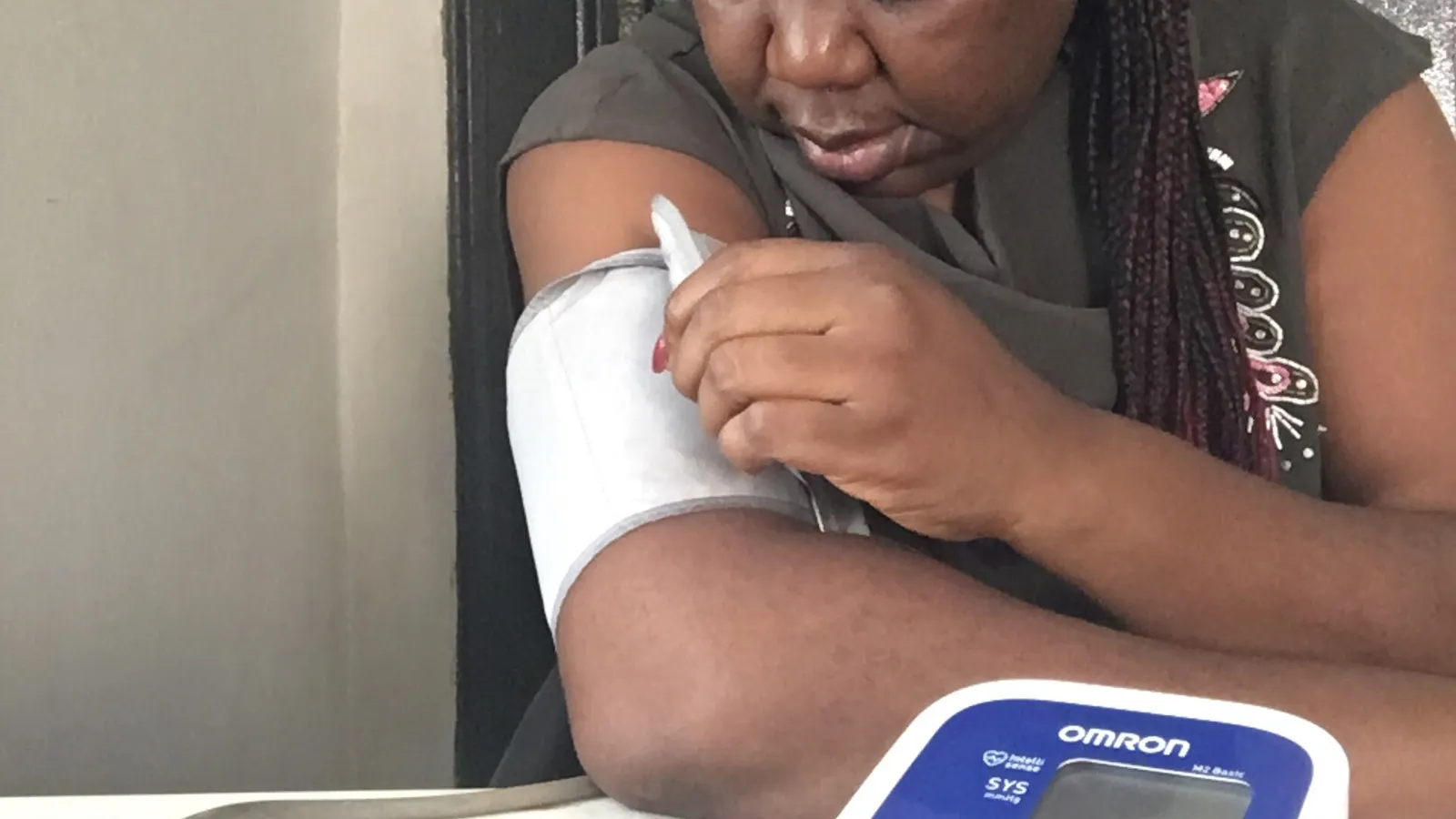
People with high blood pressure may not feel any symptoms, and the only way to know is to get it checked. The WHO estimates that 1.4 billion adults aged 30 to 79 had hypertension in 2024, that two thirds of them live in low- and middle-income countries, and that around 44 percent do not know they have it.
In West Africa, the link to stroke is especially strong. The SIREN study, which compared more than 2,000 people who had a stroke with stroke-free adults at 15 sites in Ghana and Nigeria, found that hypertension was the leading risk factor in both women and men. In women, six modifiable factors, high blood pressure, high cholesterol, diabetes, heart disease, stress and eating few green leafy vegetables, together accounted for about 99 percent of the stroke risk in the study. The researchers also found that strokes were more severe in women than in men.
That is sobering, but it also means most of that risk is something you can do something about.
How can women lower their stroke risk?
The single most useful step is to know your blood pressure. Have it checked at your clinic or pharmacy, and if it is high, take any prescribed medicine every day, even when you feel fine. The NHS also recommends:
- quitting smoking
- eating a balanced diet, with plenty of vegetables
- exercising
- cutting down on alcohol
- taking medicines for conditions such as high blood pressure or diabetes
Small swaps help with blood pressure. Taste your soup before reaching for extra salt or seasoning cubes, and add ugu, spinach or sukuma wiki to your plate more often. If you have had pre-eclampsia, migraine with aura, or a family history of stroke, bring it up when you discuss contraception or plan a pregnancy.
We talked about why heart disease and stroke get missed in women on the podcast in Blush and Bloom episode 23, and the wider picture in health conditions African women face most.
This post is education, not medical advice. If you are worried about your stroke risk, speak to a doctor who can check your blood pressure and look at your history. If you see the signs of a stroke, call for emergency help first and ask questions later.
Asele can help you keep track of what your body is telling you. You can log symptoms such as headaches and migraines alongside your cycle, and the Asele Health Brief turns your logs into a pre-visit summary to take to your doctor. Amara can help you prepare questions in Yoruba, Hausa, Igbo, Swahili, French or English. You can find us at Asele.
References
- NHS. Symptoms of a stroke. nhs.uk
- NHS. Causes of a stroke. nhs.uk
- Centers for Disease Control and Prevention. Signs and Symptoms of Stroke. cdc.gov
- NHS. Who can take the combined pill. nhs.uk
- NHS. Sickle cell disease. nhs.uk
- Miller EC, et al. Stroke in Pregnancy: A Focused Update. Anesthesia and Analgesia, 2020. pmc.ncbi.nlm.nih.gov
- Sheehy S, et al. Hypertensive disorders of pregnancy and risk of stroke in U.S. Black women. NEJM Evidence, 2023. pmc.ncbi.nlm.nih.gov
- World Health Organization. Hypertension fact sheet. who.int
- Akpalu A, et al. Differential Impact of Risk Factors on Stroke Occurrence Among Men Versus Women in West Africa (SIREN). Stroke, 2019. pmc.ncbi.nlm.nih.gov
← Back to The Journal