Women's Heart Health: Why Heart Disease and Stroke Get Missed | Blush & Bloom Podcast | Ep. 23
Women's heart health explained: why heart disease and stroke are missed in women, how pregnancy history raises risk, and the daily habits that protect you.
Heart disease is often thought of as a men's problem. It isn't. Most women will die of heart disease or stroke, yet awareness lags far behind, and the early warning signs in women are still routinely missed, dismissed, or explained away.
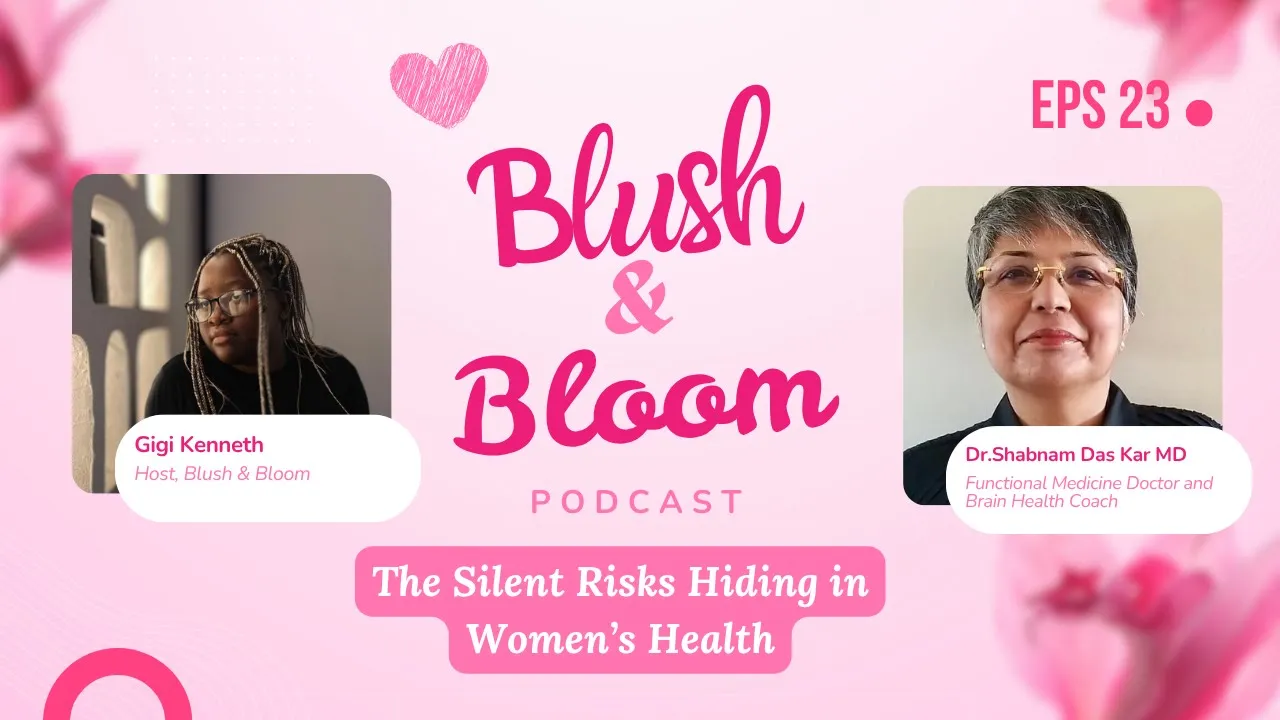
In this episode of Blush & Bloom, host Gigi Kenneth talks with Dr. Shabnam Das Kar, MD, a functional medicine physician and former obstetrician gynecologist who now focuses on hypertension, brain health, and behavior change. Trained through the American Academy of Anti-Aging Medicine and certified as a Tiny Habits coach, she brings both clinical depth and a practical, whole-body view to women's cardiovascular care.
Together they unpack why women's heart health is so overlooked, how reproductive history quietly shapes long-term risk, and the small, doable habits that protect the heart and brain before a crisis ever arrives.
In This Episode, We Cover:
- Why heart disease and stroke are the leading causes of death in women, not just men
- How pregnancy complications and reproductive history raise long-term cardiovascular risk
- What functional medicine looks at that specialist care often misses
- The link between hormones, sleep, inflammation, and blood pressure
- How to spot the early warning signs of stroke and heart attack
- Why checking your blood pressure at home is one of the simplest protective habits
- Small daily changes that support heart and brain health over a lifetime
Why is women's heart health so overlooked?
For a long time, heart disease was treated as a men's condition, so research, awareness campaigns, and even risk calculators were built around men. As Dr. Kar explains, breast cancer gets far more public attention, while heart disease and stroke, which kill more women, go under-discussed. That gap leaves many women unaware of their own risk.
"Most women will die of heart disease or stroke."
Younger women are especially under-recognized. Recent studies, she notes, show that cardiovascular risk is not just an older-woman issue, yet the assumption that "younger women are fine" still delays diagnosis and care.
What does functional medicine actually mean?
Functional medicine looks at the whole person as one connected system rather than a set of separate organs. Instead of only treating a symptom, it asks what is happening upstream. If blood glucose or blood pressure is high, the questions become: what are you eating, how are you sleeping, and what are your inflammation levels?
Dr. Kar is careful to separate this from vague wellness talk. She calls it a multi-pronged approach grounded in serious science, using food, sleep, movement, and supplements alongside prescription medication when it is genuinely needed, not instead of it.
How does pregnancy history affect heart health later?
Women carry unique reproductive risks that most people, and many doctors, never connect to the heart. Dr. Kar admits that even as a former OBGYN, she was surprised to learn how much pregnancy history matters.
Conditions like gestational diabetes, pregnancy-related high blood pressure, premature delivery, miscarriage, and endometriosis can all raise a woman's long-term risk for heart disease and stroke. The problem is that once a pregnancy ends, that risk often drops off the radar entirely, and it rarely shows up in standard risk calculators. Knowing your own reproductive history is a real part of knowing your heart.
The hormone, sleep, and blood pressure connection
One of the most useful threads in the conversation is how tightly everything is linked. Hormones from the ovaries do not only affect fertility or pregnancy. They talk to the heart, the brain, and the gut throughout a woman's life, influencing mood, brain fog, and more.
Sleep sits at the center of it. Poor sleep can push up both blood glucose and blood pressure, and chronic inflammation, driven partly by processed food and diet, quietly raises the risk for heart disease, high blood pressure, and even mood disorders. Small, consistent changes to sleep and food move several of these dials at once.
What are the warning signs of stroke and heart attack in women?
Dr. Kar walks through the BE FAST checklist for stroke: sudden loss of Balance, Eyesight or vision changes, Face drooping on one side, Arm weakness when raising both arms, Speech difficulty, and Time to call emergency services immediately. In women, symptoms are often written off as stress, indigestion, menopause, or perimenopause, which is exactly why women need to advocate for themselves.
Her core message is about not waiting. When symptoms appear, minutes matter.
"Time is equal to brain tissue when it comes to stroke. So delay is very dangerous."
Simple daily habits for a healthier heart
Awareness only helps if it turns into action, and Dr. Kar keeps the action list realistic. Checking your blood pressure at home is one of the simplest, highest-value habits, and she points listeners to clinically validated monitors and standard measurement guidance so the numbers are reliable.
As a Tiny Habits coach, she favors small changes that stick over dramatic overhauls that don't. Better sleep, more protein, less processed food, regular movement, and knowing your own numbers add up to real protection over time. You can learn more through her weekly newsletter at drkarmd.com.
FAQ
Is heart disease really a women's health issue? Yes. Most women will die of heart disease or stroke, making cardiovascular disease a leading cause of death in women. It has historically been treated as a men's problem, which is part of why awareness and early diagnosis in women still lag.
Can pregnancy complications affect heart health years later? Yes. Gestational diabetes, pregnancy-related high blood pressure, premature delivery, miscarriage, and endometriosis can all raise a woman's long-term risk for heart disease and stroke, even though this risk is often overlooked after the pregnancy ends.
What is functional medicine? Functional medicine treats the body as one connected system and looks upstream for root causes, examining food, sleep, movement, and inflammation, rather than only treating an isolated symptom. It uses lifestyle change and prescription medication together when needed.
What are the warning signs of a stroke? Use BE FAST: sudden loss of Balance, Eyesight or vision problems, Face drooping, Arm weakness, and Speech difficulty. Time is critical, so call emergency services immediately rather than waiting to see if symptoms pass.
How can women lower their heart disease risk day to day? Check your blood pressure at home with a validated monitor, prioritize sleep, eat more protein and less processed food, move regularly, and know your reproductive and family history so you can advocate for the right screening.
Final Thoughts
This episode is a grounded, empowering reminder that women's heart health starts with awareness and self-advocacy. Heart disease and stroke are not distant risks reserved for men or the elderly, and much of the danger comes from how easily women's symptoms are dismissed. By understanding your history, tracking simple numbers like blood pressure, and building small daily habits, you can take charge of your heart and brain health long before a crisis. The goal, as Dr. Kar puts it, is to know your risks and know what you can do about them.
👥 Connect with the Guest
Dr. Shabnam Das Kar: https://www.linkedin.com/in/dr-shabnam-das-kar-md-73264422/
Gigi Kenneth (Host): https://www.linkedin.com/in/gigikenneth
💕 Explore More from Asele
Visit: https://www.asele.tech
Try the Asele app: https://asele.health
Join our WhatsApp community: https://chat.whatsapp.com/F8GY4RV7Bm2CtCfq6TONsV
LinkedIn: https://linkedin.com/company/asele
Spotify: https://open.spotify.com/show/6NEsMfkG3dvl0pYXU40Efi
← Back to The Journal