Pregnancy: The Complete Guide, From Positive Test to Postpartum
Everything in one place, from the first positive test to the months after birth: antenatal care, nutrition, the warning signs that need help the same day, common conditions, loss, birth prep, and looking after your body and mind afterwards.

TL;DR: Start folic acid, book antenatal care early and go to every visit, because the routine blood pressure, urine and blood checks are how most problems are caught. Learn the warning signs that need help the same day: bleeding, severe tummy pain, a headache that will not go away with vision changes, fluid leaking, regular tightenings before 37 weeks, fever, or your baby moving less. Black and African women face higher risks in pregnancy, mostly for systemic reasons, so knowing the signs and speaking up matters. After birth, your body and your mind both need care for months, not days.
A positive test can bring joy, fear, disbelief, or all three before you have even put the stick down. Then come the questions. When do I see someone? What can I eat? Is this cramp normal? Who do I call at 2am? This guide walks the whole road in order, from the first weeks to the months after your baby arrives, with the African and diaspora context that most pregnancy books skip. Each section gives you the essentials and then points you to a deeper post when you want more. Whether you are in Ibadan, Mombasa, Accra, Durban or Birmingham, the aim is the same: that you feel prepared, know what is normal, and know when to act.
What happens in early pregnancy?
Early pregnancy symptoms usually start around 4 to 6 weeks, according to the NHS. A missed period is the classic sign, along with nausea, sore breasts, tiredness and needing to wee more often. Some women have a little spotting around the time their period was due. Not everyone has every symptom, and having few symptoms does not mean something is wrong.
Two things are worth doing straight away. First, take folic acid. The NHS advises 400 micrograms every day for the first 12 weeks, ideally starting before you conceive, to lower the risk of neural tube problems such as spina bifida. Some women need a higher 5 mg prescription dose, including women with diabetes or sickle cell disease. Second, contact a midwife, clinic or doctor to start antenatal care. If you are still planning, our fertility guide and fertility tips for getting pregnant cover the months before.
How does antenatal care work, trimester by trimester?
Antenatal care is a series of check-ups that track your health and your baby's growth. The WHO recommends at least eight antenatal contacts across a pregnancy, up from four, because more contact means more chances to catch problems early. Going early and going often is one of the most protective things you can do.
Roughly, the map looks like this on the NHS schedule, though schedules vary by country:
- First trimester (up to about 13 weeks). A booking appointment with a midwife, usually at 8 to 12 weeks, with blood tests for your blood group and iron levels. The NHS offers screening for sickle cell and thalassaemia before 10 weeks, and for hepatitis B, HIV and syphilis at 8 to 12 weeks. A dating scan at 11 to 14 weeks checks when your baby is due and whether you are having more than one baby.
- Second trimester (about 14 to 27 weeks). The 20-week scan, at 18 to 21 weeks, checks your baby's development. A glucose test between 24 and 28 weeks is offered if you have risk factors for gestational diabetes.
- Third trimester (28 weeks to birth). Regular checks of your blood pressure, urine, your bump size and your baby's movements.
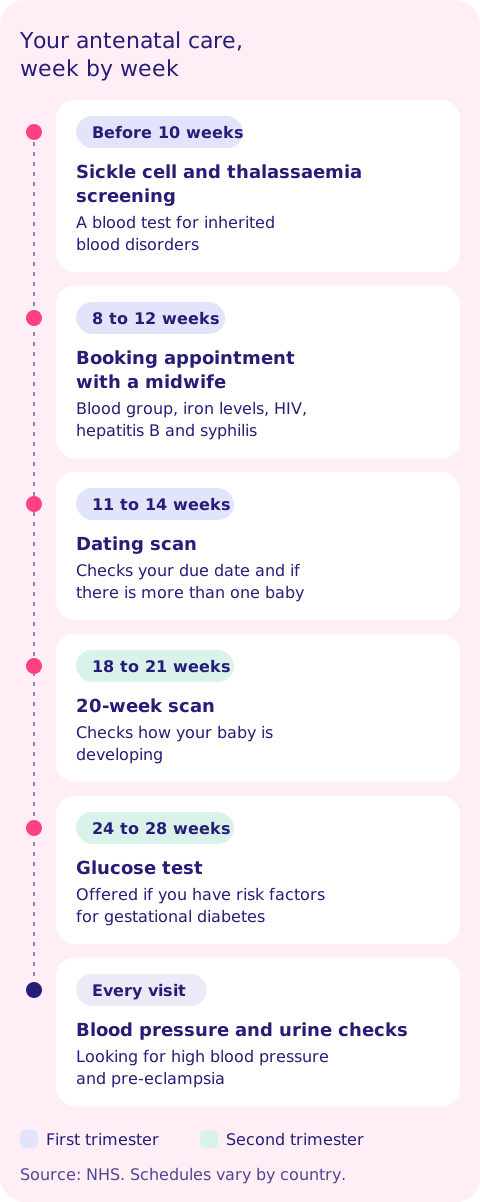
The main antenatal checks on the NHS schedule. Timings vary by country, so ask your clinic for theirs.
At every visit, a blood pressure reading and urine test check for high blood pressure and pre-eclampsia. Our walkthrough of prenatal tests and scans explains each one, and genetic screening in pregnancy covers the optional combined test, NIPT, amniocentesis and CVS. If the titles on your notes confuse you, who's who in pregnancy care explains what midwives, obstetricians and other specialists do, and our list of questions to ask at every antenatal appointment helps you leave each visit knowing what happens next. For why staying ahead of risk matters, listen to the Blush and Bloom episode on proactive pregnancy care.
What should you eat during pregnancy?
The NHS is clear that you do not need to "eat for 2", even with twins. You will probably feel hungrier than usual, but what matters more is a varied diet with enough protein, such as beans, pulses, fish, eggs and meat, plus the right supplements.
Iron deserves special attention. The WHO estimates that 37 percent of pregnant women worldwide have anaemia, with the heaviest burden in low and lower-middle income countries. Leafy greens such as ugu and spinach, beans, eggs, fish and meat all help, and your midwife will check your iron levels with blood tests. The NHS also advises a daily vitamin D supplement, and notes that people with darker skin make less vitamin D from sunlight.
The NHS list of foods to avoid in pregnancy includes raw or undercooked meat, eggs that are not well cooked (unless they carry the UK British Lion stamp), some unpasteurised dairy, raw shellfish, and shark, swordfish and marlin. It also advises no more than 200 mg of caffeine a day, and the NHS recommends not drinking alcohol at all in pregnancy. Many food beliefs passed down in families are harmless, but some, such as avoiding eggs or fish, cut out exactly the foods you need. Our pregnancy nutrition guide goes trimester by trimester with affordable, local options, and iron deficiency anaemia in women explains the signs of low iron.
What are the warning signs you should never wait on?
Most aches and twinges in pregnancy are normal. Some symptoms are not, and they need a call to your midwife, maternity unit or hospital the same day, at any hour. When in doubt, call. Being checked and sent home is always a better outcome than waiting.
- Bleeding. Spotting is common in early pregnancy and not always serious, but the NHS says any bleeding should be checked by a professional, and heavy bleeding needs urgent care.
- Severe or one-sided tummy pain in early pregnancy, especially with shoulder tip pain, dizziness or fainting. This can signal an ectopic pregnancy.
- A severe headache that will not go away, blurred or flashing vision, pain just below the ribs, or sudden swelling of the face, hands or feet. These are signs of pre-eclampsia.
- Regular tightenings, period-type pain, a gush or trickle of fluid, or unusual backache before 37 weeks. These can mean premature labour.
- Your baby moving less than usual, or a change in their pattern. The NHS says do not wait until the next day: call immediately, even in the middle of the night.
- A fever, chills or feeling very unwell. The WHO lists pregnant women among those at higher risk of severe malaria and stresses testing early, so in malaria areas a fever in pregnancy needs checking promptly.
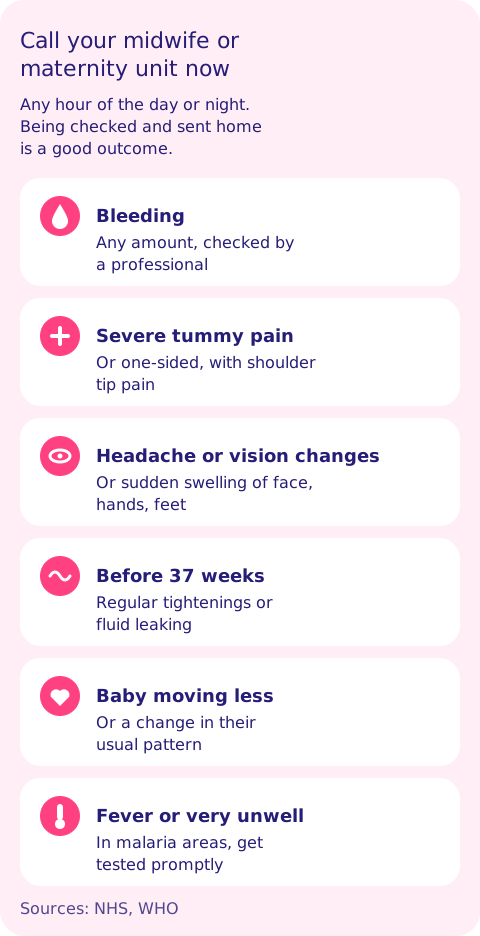
Save or screenshot this card so it is to hand at 2am.
What is pre-eclampsia, and who is at risk?
Pre-eclampsia is a condition that causes high blood pressure in pregnancy, usually from 20 weeks, and it can also appear in the days or weeks after birth. The WHO estimates it affects 3 to 8 percent of women who give birth, and hypertensive disorders cause about 16 percent of maternal deaths worldwide. A review across 24 African countries found that about one in 10 pregnancies is affected by a high blood pressure disorder.
The NHS says risk is higher in a first pregnancy, if you are 40 or older, if you had high blood pressure, diabetes or kidney disease before pregnancy, if you had pre-eclampsia before, if you are from a Black or South Asian background, or if you are carrying twins or triplets. For women at higher risk, a midwife or doctor may prescribe aspirin every day from 12 weeks until birth, but only take it if a clinician prescribes it. Our post on pre-eclampsia warning signs explains the full list, the aspirin guidance in different countries, and why it can still happen after you go home.
What are ectopic pregnancy and preterm labour?
An ectopic pregnancy is one that implants outside the womb, almost always in a fallopian tube. In the UK, around 1 in every 90 pregnancies is ectopic. It cannot continue, and if the tube ruptures it causes internal bleeding, which is an emergency. Warning signs usually appear between 4 and 12 weeks: one-sided tummy pain, vaginal bleeding or brown discharge, shoulder tip pain, and discomfort when peeing or pooing. Previous pelvic infections such as chlamydia, which are often silent, raise the risk. Read more in ectopic pregnancy signs.
Preterm birth means a baby born before 37 weeks. The WHO estimates 13.4 million babies were born preterm in 2020, and complications of preterm birth are the leading cause of death in children under five. In the UK, about 8 in 100 babies arrive early. Knowing the signs means you can get help fast, because some treatments, such as steroid injections to help a baby's lungs, work best when given before birth. Our guide to preterm labour signs explains what to look for, and the Blush and Bloom episode on predicting preterm birth looks at the research trying to spot risk earlier.
Which conditions need extra care in pregnancy?
Gestational diabetes is diabetes that develops during pregnancy, usually in the second half. The NHS offers screening to women of Black, African-Caribbean, South Asian or Middle Eastern origin, along with others at higher risk, so many African women will be offered the glucose test. It is usually managed with diet changes, monitoring and sometimes medicine, and it normally goes after birth, though it raises your later risk of type 2 diabetes. See our full post on gestational diabetes.
Malaria is more dangerous in pregnancy. The WHO lists pregnant women among those at higher risk of severe infection, and malaria in pregnancy can cause premature delivery or a baby with low birth weight. In areas where malaria is common, WHO-backed prevention includes sleeping under an insecticide-treated net and intermittent preventive treatment in pregnancy, known as IPTp. Diaspora women travelling home to visit family should talk to a clinician before they go. Our post on malaria in pregnancy covers prevention and treatment.
Sickle cell disease health risks intensify in pregnancy, and the WHO says women with SCD face a 4 to 11 times higher likelihood of maternal death than those without it, along with a higher chance of complications such as pre-eclampsia, and babies born early or small. The WHO also says that with quality care, women with SCD can have safe and healthy pregnancies, and the NHS advises a higher 5 mg folic acid dose. Knowing your genotype and your partner's also matters for your baby. Read sickle cell disease and women's health.
| Condition | Why it matters in pregnancy | What helps |
|---|---|---|
| Gestational diabetes | Screening is offered to Black, African-Caribbean, South Asian and Middle Eastern women, among others | A glucose test at 24 to 28 weeks, diet changes, monitoring and sometimes medicine |
| Malaria | Pregnant women are at higher risk of severe infection, and babies may be born early or small | An insecticide-treated net, IPTp where malaria is common, and prompt testing for any fever |
| Sickle cell disease | A 4 to 11 times higher likelihood of maternal death, plus pre-eclampsia and early birth | Planning ahead, a 5 mg folic acid dose and specialist care |
| Pre-eclampsia | High blood pressure that is most likely from 20 weeks and can follow birth | Blood pressure checks at every visit, and aspirin from 12 weeks if prescribed |
Why do Black and African women face higher risks?
Black and African women are more likely to die or be seriously harmed in pregnancy and childbirth, and the reasons are systemic, not biological. In the UK, the MBRRACE-UK reviews have shown for years that Black women are several times more likely to die around pregnancy than white women. Globally, the WHO estimates that sub-Saharan Africa accounted for around 70 percent of maternal deaths in 2023, and that most of these deaths could have been prevented.
The drivers include being dismissed when you raise a concern, uneven access to timely care, and conditions such as pre-eclampsia, anaemia and haemorrhage being caught too late. That means the gap can be closed. Track your symptoms with dates, name your worry plainly ("I am worried this could be pre-eclampsia"), ask for it to be written in your notes, and bring someone with you. Our post on why Black women face higher risks in pregnancy and childbirth has a full self-advocacy toolkit, and the Blush and Bloom episode with Emma Abassi talks about birth trauma and the gaps in maternal education.
What happens if you lose a pregnancy?
Miscarriage is the loss of a pregnancy before 24 weeks. It is far more common than most people realise: a 2021 Lancet series found that about 15 percent of recognised pregnancies end in miscarriage. According to ACOG, about half of early miscarriages happen because the embryo did not develop properly, often due to chromosome problems. ACOG is clear that in almost every case it is not your fault. Working, exercise, stress, arguments and sex do not cause miscarriage.
The main sign is vaginal bleeding, sometimes with cramping, and the NHS advises urgent help if bleeding is heavy or pain is severe. Grief after loss is grief, whatever the week, and many women carry it quietly because pregnancy is not announced early in many African families. You are allowed to mourn and to ask for support. If you have had several losses, ask about investigation. Our post on what happens during a miscarriage explains the physical process, care options and what comes after.
How do you prepare for birth?
The NHS suggests packing your hospital bag at least 3 weeks before your due date, because only 1 in 20 babies arrives on the due date itself. Pack in sections: you, your baby, and your documents, including your birth plan and hospital notes. Ask your hospital or birth centre what they provide, because what you are expected to bring varies between hospitals and countries. Here is a starter list drawn from the NHS checklist:
- Documents, Your birth plan, hospital notes and any medicines you take.
- For labour, Loose, comfortable clothes, snacks, drinks and a water bottle, and a phone charger.
- For you after birth, Front-opening nightwear, 2 packets of super-absorbent maternity pads, 5 or 6 pairs of knickers, nursing bras and breast pads, and a wash bag.
- For your baby, Vests and sleepsuits, a hat, an outfit for going home, nappies, wipes or cotton wool, muslin squares and a blanket.
- For the trip home, A car seat if you are travelling by car.
Our post on how to pack your hospital bag has the full checklist.
Think too about where your baby will sleep and how you will get around. The NHS advises placing your baby on their back to sleep, in a separate cot or Moses basket in the same room as you, for at least the first 6 months. How to choose a cot safely covers mattresses, gaps and second-hand cots, and how to choose a pram covers what to look for in the newborn months.
What happens to your body and mind after birth?
The weeks after birth are a recovery, and the risks do not end at delivery. Bleeding is heavy at first and fades over a few weeks, but the NHS says to tell your midwife, health visitor or GP straight away about sudden or very heavy bleeding, a high temperature with a sore tummy, pain or swelling in one calf, chest pain or difficulty breathing, or a headache with vision changes or vomiting, since pre-eclampsia can develop in the days or weeks after birth.
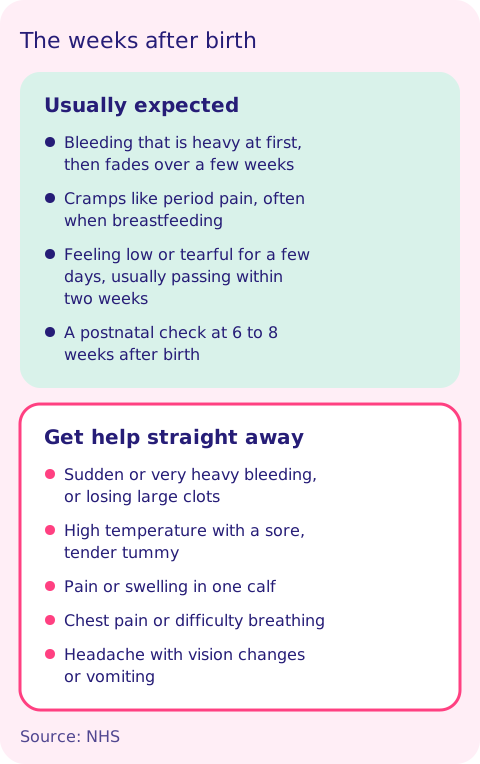
What is usually expected after birth, and what needs a call straight away.
Your mind needs care too. Feeling tearful or low for a few days is so common it has a name, the baby blues, and the NHS notes it usually passes within two weeks. Postnatal depression is different: it lasts longer, can start in pregnancy or up to a year after birth, and usually gets better with treatment. Postpartum anxiety, the constant worry that will not switch off, is also common and very treatable. The pressure to look like a happy, grateful new mother, and relatives who say "pray about it", can make it harder to speak. Read our postpartum depression guide and postpartum anxiety. If you have confusion, hallucinations, or thoughts of harming yourself or your baby, the NHS says to ask for an urgent assessment the same day.
How can you get breastfeeding off to a good start?
The WHO recommends starting breastfeeding within the first hour of birth and breastfeeding exclusively for the first six months, meaning no other foods or liquids, including water, then continuing alongside other foods up to two years or beyond. Colostrum, the thick early milk, is worth giving, even if older relatives say otherwise.
Breastfeeding is natural but not always easy. Sore nipples, engorgement, worries about supply, mastitis and the return to work can all come up, and help from a midwife or lactation consultant can make a big difference. If formula becomes part of your story, for any reason, that is a valid choice. Our post on breastfeeding tips and common challenges covers latch, pumping, storage and when to ask for help, and the Blush and Bloom episode on breastfeeding support looks at what better support could look like.
How can Asele help during pregnancy?
Asele keeps a record you can bring to the room. Symptom logging lets you note headaches, swelling, bleeding, your mood and how you are feeling each day, so a worrying pattern is easier to spot and harder to dismiss. The Asele Health Brief turns those logs into a pre-visit summary you can hand to your midwife or doctor, which helps a short appointment hear the full story. If you want to talk through a symptom or plan your questions first, Amara can chat with you in Yoruba, Hausa, Igbo, Swahili, French or English. You can find us at Asele.
Frequently asked questions
When should I book my first antenatal appointment?
As soon as you know you are pregnant. In the UK the booking appointment usually happens at 8 to 12 weeks, with sickle cell and thalassaemia screening offered before 10 weeks, and the WHO recommends at least eight antenatal contacts across pregnancy. Booking early gives time for blood tests, a dating scan and, if you need it, a low-dose aspirin prescription to start on schedule.
Is spotting in early pregnancy normal?
Light spotting can happen in early pregnancy and is not always serious, but it should always be checked. Bleeding with severe or one-sided pain, dizziness or shoulder tip pain needs urgent care, because it can be a sign of ectopic pregnancy or miscarriage.
How much weight should I gain in pregnancy?
It depends on your weight before pregnancy, so ask your midwife what is healthy for you. The NHS reminds women that you do not need to "eat for 2", and the overall trend matters more than any single weigh-in.
Can I keep eating my usual foods while pregnant?
Most of them, yes. Local staples such as beans, leafy greens, eggs, fish, groundnuts and fruit are excellent. Follow the NHS list of foods to avoid, such as raw or undercooked meat, some unpasteurised dairy, and shark, swordfish and marlin, skip alcohol, and keep caffeine to 200 mg a day or less.
How long does postpartum recovery take?
There is no fixed timeline. In the UK you should have a postnatal check 6 to 8 weeks after birth, and recovery often takes longer after a caesarean or a difficult birth. Emotional recovery can take longer still. Keep watching for warning signs such as heavy bleeding, fever, chest pain or a severe headache through those first weeks, and speak up if your mood stays low beyond two weeks.
This guide is education, not medical advice. Your midwife, doctor or obstetrician knows your history and should guide your care. If you have bleeding, severe pain, a severe headache with vision changes, fluid leaking, fewer baby movements or thoughts of harming yourself, seek help straight away.
References
- NHS. Signs and symptoms of pregnancy. nhs.uk
- NHS. Vitamins, supplements and nutrition in pregnancy. nhs.uk
- World Health Organization. New guidelines on antenatal care for a positive pregnancy experience. who.int
- NHS. Vaginal bleeding in pregnancy. nhs.uk
- World Health Organization. Pre-eclampsia fact sheet. who.int
- NHS. Ectopic pregnancy. nhs.uk
- World Health Organization. Preterm birth fact sheet. who.int
- NHS. Premature labour and birth. nhs.uk
- NHS. Gestational diabetes. nhs.uk
- World Health Organization. Malaria fact sheet. who.int
- World Health Organization. Maternal mortality fact sheet. who.int
- Quenby S, et al. Miscarriage matters: the epidemiological, physical, psychological, and economic costs of early pregnancy loss. The Lancet, 2021. pubmed.ncbi.nlm.nih.gov
- American College of Obstetricians and Gynecologists. Early pregnancy loss. acog.org
- NHS. Miscarriage. nhs.uk
- NHS. Postnatal depression. nhs.uk
- World Health Organization. Breastfeeding. who.int
- NHS. Your antenatal appointments. nhs.uk
- NHS. Screening tests in pregnancy. nhs.uk
- NHS. Have a healthy diet in pregnancy. nhs.uk
- NHS. Foods to avoid in pregnancy. nhs.uk
- NHS. Drinking alcohol while pregnant. nhs.uk
- World Health Organization. Anaemia fact sheet. who.int
- NHS. Pre-eclampsia. nhs.uk
- NHS. Your baby's movements. nhs.uk
- World Health Organization. WHO issues first global guideline to improve pregnancy care for women with sickle cell disease, 2025. who.int
- NHS. Pack your bag for labour. nhs.uk
- NHS. Reduce the risk of sudden infant death syndrome (SIDS). nhs.uk
- NHS. Your body after the birth. nhs.uk
- NHS. Postpartum psychosis. nhs.uk
- NHS. Your 6-week postnatal check. nhs.uk