What Happens When Your AI Gets Women's Health Wrong: Gigi's Talk at AI Builders 2026
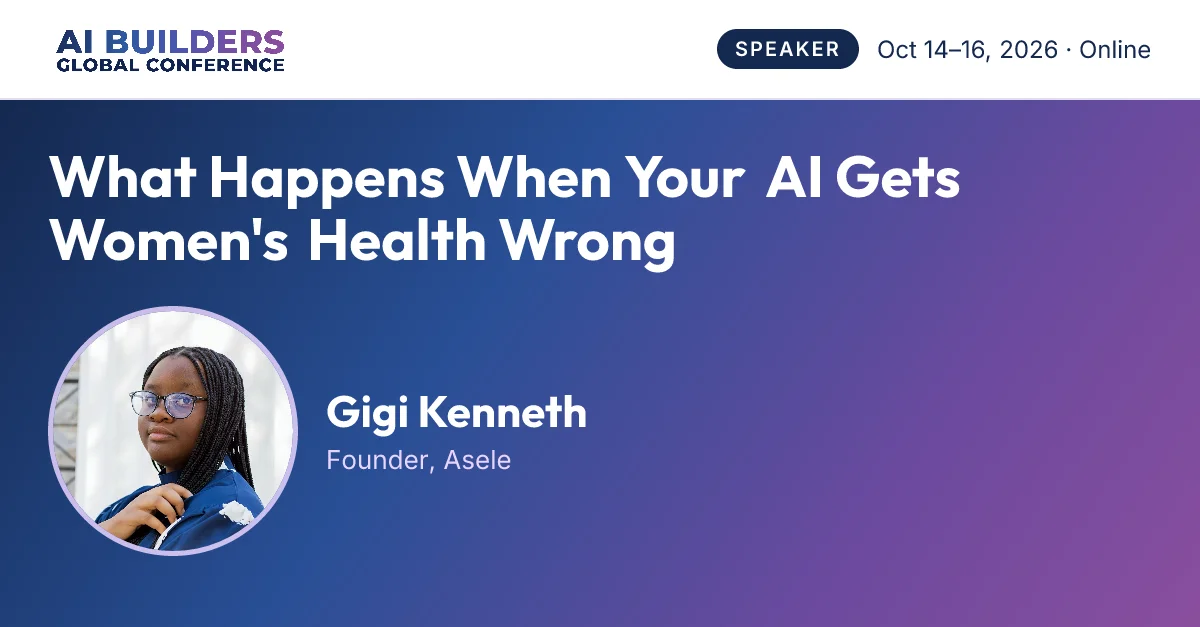
On 16 October, Gigi Kenneth speaks at AI Builders Global Conference 2026 on the architecture and safety framework behind Asele's AI layer.
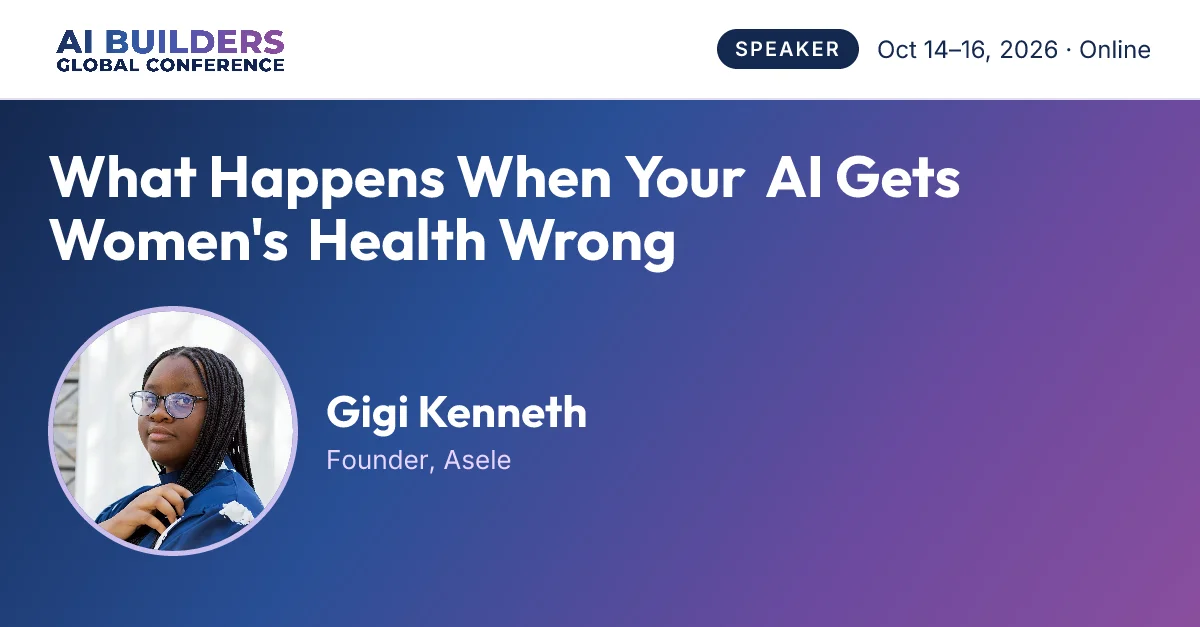
TL;DR: Gigi Kenneth, Asele's founder, speaks at AI Builders Global Conference 2026 on Friday 16 October at 11:50 ET (16:50 in Lagos and London). The talk covers the architecture and safety framework behind Asele's AI layer. Use code ASELE20-71F1E4F9E89E for 20% off a paid ticket.
The session
- Title: What Happens When Your AI Gets Women's Health Wrong
- When: Friday 16 October, 11:50-12:10 ET (16:50 Lagos and London, 18:50 Nairobi)
- Track: RAG, Security & Applied Engineering
- Format: 20-minute TED-style talk, online
What the talk covers
Most women's health apps collect rich longitudinal data, including cycle length, symptom severity, mood, bleeding patterns and pain scores, and then display it back as a calendar.
At Asele, we built an AI layer that reasons over this data to surface patterns, flag anomalies, generate structured appointment summaries, and deliver cycle-aligned nutrition and fitness recommendations personalised to what the user is reporting. The talk covers the practical architecture behind that.
Four things Gigi will share
- Consequence severity. How we classify health tasks by consequence severity to determine model choice and output constraints.
- Pattern detection without diagnosis. How we structure and embed months of symptom history for pattern detection without tipping into diagnosis territory.
- Where general-purpose LLMs fell short. Where they fell short for clinically adjacent tasks, and what we did about it.
- The safety framework. How we measure anomaly detection performance, track false positives, and define human review triggers.
When the AI does not answer directly
Some requests need additional safeguards rather than a direct AI response. The talk gives examples:
- higher-risk symptom combinations
- uncertainty beyond a defined threshold
- requests that move from wellbeing support into medical decision-making
Expect decisions around evaluation, safety thresholds, human review triggers, and the tension between what AI can do and what it should do when the person on the other end is trying to understand their own body. Getting this wrong has consequences. This talk is about what it takes to get it right.
How to watch
Get a ticket at aibuildersnetwork.org/conference/tickets with code ASELE20-71F1E4F9E89E for 20% off, then add the session to your calendar from the conference schedule. Our guide to joining from Lagos, London or Nairobi has the times in your zone.
← Back to The Journal